Google Ads for Ecommerce
A Fast and Effective Solution for Ecommerce Stores
Why Is Google Ads Crucial for Ecommerce Stores?
Google Ads provides a fast and effective solution for ecommerce stores to reach their target audience and generate sales. This provides a significant advantage especially for newly built stores, as other digital marketing channels such as SEO may require time to achieve results.
Online customers use Google heavily to search for products. Google Ads allows ecommerce stores to communicate their marketing message to these users.
By formulating effective keyword strategies, online stores can reach potential customers who are more likely to convert.
For example, many ecommerce stores target generic keywords such as “treadmills”. This is broad targeting and may include irrelevant users.
Targeting bottom funnel keywords such as “buy treadmills online” can help these stores achieve better results.
Matching the buyer intent is also helpful to improve conversions. For example, targeting keywords such as “treadmills for seniors” or “treadmills for small spaces” enables advertisers to customize the message and offer tailored products for specific audiences.
Google Ads offers detailed targeting options, which helps the ecommerce stores to refine their audience based on demographics, interests, in-market behavior, and interactions. Formulating smart strategies can ensure that the advertising budget is spent efficiently.
For example, adding audiences such as luxury shoppers to search campaigns help refine the targeting and increase campaign efficiency.
Ecommerce stores can also benefit from other types of Google Ads campaigns.
Shopping campaigns are effective to reach potential customers as they allow ecommerce stores to directly promote their products. Performance Max campaigns often generate high conversions by targeting the warm audiences effectively.
Demand Gen, display, and video campaigns can help ecommerce stores to increase brand awareness, communicate their message, and drive traffic to their websites.
Using multiple campaign types to complement each other can help you to maximize the impact of Google Ads platform.
Since there is high competition in many ecommerce SEO niches and Google tends to rank big ecommerce stores above others in the organic search results, Google Ads allows stores to gain visibility. Smaller ecommerce stores may struggle to rank organically, but they can benefit from search ads to reach their audience and communicate their message.
Another key advantage is speed. Unlike SEO, which can take months to deliver results, Google Ads allows ecommerce stores to generate traffic and sales almost instantly once campaigns are launched.
How Can Ecommerce Stores Benefit from Different Campaign Types?
Generic Google Ads tactics may generate poor results for online businesses. Ecommerce stores need tailored strategies to maximize their performance.
01
Search Campaigns
Google search campaigns provide a fast and effective alternative to organic search channel.
Targeting the right keywords and arranging the campaign settings carefully can yield immediate results.
The 5 KEYS Framework can help online stores to unlock high-performance keywords. A strong negative keyword list is crucial to improve budget efficiency.
As the AI revolution gathers pace, using AI Max in search campaigns can help ecommerce stores to show ads in AI Overviews section.
02
Shopping Campaigns
The performance of shopping campaigns is crucial for ecommerce stores to maximize their results.
Since Performance Max campaign type focuses on the users who are at the bottom of the funnel and actively looking for products to buy, it can generate high conversions.
Standard shopping campaigns can also generate good results by displaying relevant products to online shoppers.
If you target the right people and run effective traffic campaigns, you can use shopping campaigns to retarget these people and achieve conversions.
03
Demand Gen and Other Campaigns
Demand Gen campaigns are designed to reach people who are ready to engage with brands and products.
If these campaigns are structured effectively, they can help online stores reach potential customers. Strong visuals and videos can help these stores communicate their message in a powerful way.
Online businesses can also benefit from video campaigns to reach and engage with their audience on YouTube and across Google network. This can help them build popularity in their niche.
How Can Google Ads Boost Ecommerce Results?

While Google Ads helps ecommerce stores achieve various business objectives, the priority is achieving sales.
Google Ads campaigns require a certain budget, but they can provide fast and effective results.
Since shopping and performance max (PMAX) campaigns are designed to generate sales, online stores should prioritize them to boost ecommerce results.
Shopping campaigns display product images, prices, and store names directly on the search results page, helping ecommerce stores convert potential customers when they are actively searching for relevant products.
Performance Max campaigns leverage Google AI to reach the potential buyers. They usually retarget visitors across multiple platforms and highlight the products they are interested in to achieve conversion. These campaigns often deliver strong ROAS by converting warm audiences into customers.
Other campaign types can also help ecommerce stores boost ecommerce results.
By targeting the right keywords in search campaigns, ecommerce stores can attract potential customers to their website.
Branded search campaigns are often the priority as they typically generate the highest return on ad spend (ROAS). Since other Google Ads results may be displayed above your organic search results, you should protect your territory and maximize your branded returns.
Other than these campaign types, ecommerce businesses can benefit from Demand Gen or display campaigns to announce their marketing messages and introduce their brands to new audiences.
How to Optimize Google Ads for Ecommerce?
Many advertisers complain about spending high budgets and not getting enough conversions. Optimizing Google Ads campaigns effectively is the key to achieving high conversion rates and profitability.
Ecommerce stores should focus on multiple aspects to improve performance.
Target the Right Keywords
Since search campaigns rely on keywords, targeting the right ones impacts the campaign performance significantly.
Google Ads typically guides the advertisers to use broad match keywords and let the Google algorithm find the right people for them. This does not always yield the best performance.
You should focus on keywords that indicate strong buying intent. Instead of listing a few generic keywords, you may focus on the keywords related to your business, customer shopping journey, and your target audiences to identify effective keywords.
When you target highly generic keywords such as “shoes”, you should narrow your audience by using other targeting options to make this targeting effective.
You should use effective negative keyword lists to prevent ads from showing for irrelevant search terms.
Optimize Product Feeds
Product feed optimization is crucial for ecommerce stores. This will impact the performance of shopping campaigns significantly.
You should have a high-quality feed. The product titles and descriptions should be descriptive and include relevant keywords. High-quality images and competitive pricing can also improve click-through rates and campaign performance.
Use Automated Bidding Strategies Carefully
Automated bidding strategies such as Maximize Conversion Value or Maximize Conversions can be effective to increase the performance of your campaigns, but you should use them carefully.
While these options can improve results, ecommerce stores should monitor cost per click (CPC) and ROAS metrics closely.
If you have well-defined segments and you reach almost all of the people in that segment, you can also benefit from manual click bidding.
Use Audience Targeting Options to Refine Your Targeting
These options can improve campaign performance.
Adding audience targeting to search campaigns can help you to communicate only with your target audience. Since this eliminates other people who search for your keywords, it ensures that you use your budget efficiently
In-market audiences and custom segments can also be effective to refine your targeting in display campaigns.
It is a good idea to create combined audiences to improve efficiency by layering multiple criteria such as demographics, interests, and website visits.
Enhance Ad Copy and Assets
Ad copy is crucial to get the attention of your target audience and achieve high click-through rates.
Formulating tailored messages, highlighting unique selling propositions, discounts, or promotions can help ecommerce stores achieve better performance.
Using assets such as sitelinks, callouts, and structured snippets can also increase ad visibility and improve performance.
Optimize Landing Pages
Even if an ad performs well, a poorly optimized landing page can reduce conversions.
Ecommerce stores should ensure that the ad and the landing page have the same message and people see relevant products on these pages.
Landing pages should load quickly, provide sufficient information, and a clear call to action.
How Many Google Ads Campaigns Should You Run for Ecommerce?
This decision depends on your budget and goals. Ecommerce stores should start with the campaigns that are likely to provide more conversions. Allocating budget to these campaigns prior to others will help them to achieve profitability and this will support scaling the budget to include more campaigns.
Branded search campaigns should always be running as you have to defend your territory. These campaigns typically have the highest ROAS and should have enough budget to run throughout the day.
Shopping and Performance Max campaigns are also crucial as they generate high conversion rates by showcasing products visually.
After these campaigns, you may focus on search campaigns. Targeting the right keywords and refining the audience can generate effective results. It may be a good idea to test the performance of dynamic search campaigns.
If the budget allows, you may consider allocating a small budget for display, Demand Gen, or video campaigns. These can be helpful to reach new audiences and drive awareness.
Google Ads for Ecommerce Book
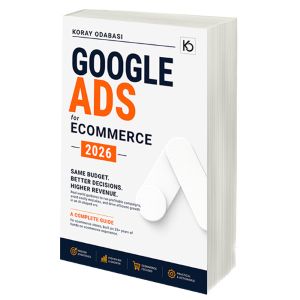
This book shows you how to make better decisions across different campaign types using proven ecommerce strategies, real-world examples, and practical frameworks. Discover proven tactics to maximize results, eliminate wasted spend, and turn Google Ads into a consistent profit-generating channel.
Google Ads for Ecommerce is a Part of The Ecommerce Growth System
The Ecommerce Growth System is a continuously updated resource built on real ecommerce execution across SEO, Google Ads and Meta Ads. Insights you can apply directly to your business.